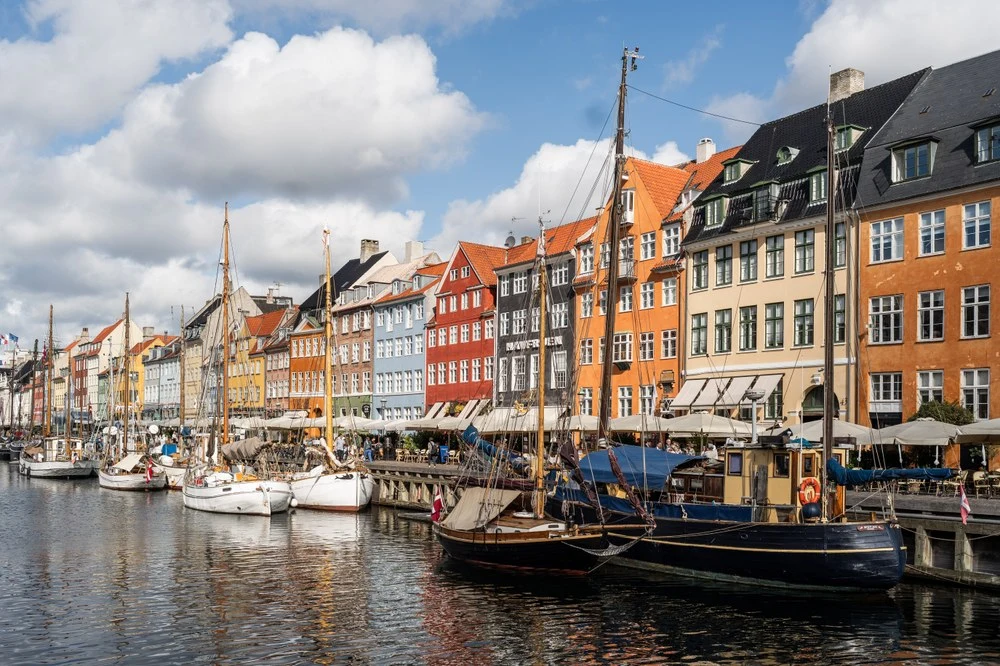
If you've been searching for a fully funded scholarship in Europe that doesn't require you to jump through a hundred separate hoops, the Danish Government Scholarship might be exactly what you've been looking for. Denmark is consistently ranked among the happiest, safest, and most innovative countries in the world and its universities are every bit as impressive as its quality of life. The best part? The Danish government actively invests in bringing the world's brightest minds to its campuses, and it backs that commitment with real money.
This guide covers everything you need to know about the Danish Government Scholarships for 2027: what they are, who can apply, which universities participate, how much funding you get, and exactly how to apply. Whether you're from Asia, Africa, the Americas, or anywhere else outside the EU and EEA, this scholarship could be your gateway to a world-class European education.
What Are the Danish Government Scholarships?
The Danish Government Scholarships are fully funded or partially funded opportunities offered by the Government of Denmark to attract highly talented non-EU/EEA international students to study at Danish universities. These scholarships are mainly provided for Master's degree programs, though some universities may offer them for other levels as well.
The scheme is not one single scholarship managed from a central office. Instead, Danish universities receive a limited number of government scholarships each year to fund highly qualified full-degree students from non-EU/EEA countries and Switzerland. Each participating university administers its own allocation, sets its own selection criteria within government guidelines, and decides how many awards to make each academic year.
This decentralized structure means the scholarship experience can vary somewhat depending on which university you apply to but the core purpose remains the same: to remove financial barriers for exceptional international students who want to study in Denmark.
Higher education in Denmark is free for EU/EEA students, while non-EU/EEA students have to pay tuition fees of around €6,000 to €16,000 per year. The Danish Government Scholarship addresses this gap directly, making Denmark genuinely accessible to talented students from all over the world.
Why Study in Denmark?
Before diving into the scholarship details, it's worth taking a moment to understand why Denmark is such an attractive destination for international students because the scholarship is only part of the story.
Denmark is a small country with an outsized reputation for excellence. Its universities consistently rank among the best in Europe, its research output is remarkable for its population size, and its approach to education collaborative, critical-thinking-based, and highly practical produces graduates who are immediately employable anywhere in the world.
Beyond academics, Denmark offers one of the highest standards of living globally. Denmark ranks among the top five happiest countries globally, and its cities particularly Copenhagen, Aarhus, and Odense are clean, safe, well-connected, and genuinely welcoming to international students. The country has a deeply ingrained culture of work-life balance, gender equality, and environmental sustainability that many students find refreshing after more high-pressure academic environments.
Danish universities also teach extensively in English. Danish higher education institutions offer more than 500 English-taught study programmes, meaning you can complete your entire degree without needing to speak Danish. That said, picking up a few words of the local language never hurts when building friendships and navigating daily life.
Which Universities Participate?
The Danish Government Scholarship is distributed across eight major Danish universities, each with its own programs and scholarship terms. Here is an overview of the key participating institutions:
1. University of Copenhagen (UCPH)
The University of Copenhagen is Denmark's oldest and most prestigious university, consistently ranked in the global top 100. This scholarship program is aimed at supporting exceptional non-EU/EEA students pursuing a Master's degree. It provides financial assistance to help cover tuition fees and, in some cases, living expenses, allowing students to focus on their studies at one of Scandinavia's leading universities. The Faculty of Humanities, Faculty of Science, and other faculties each manage their own allocations. Certain faculties offer combined tuition and living expense coverage for particularly outstanding students.
2. Aarhus University (AU)
Aarhus University is one of Scandinavia's leading comprehensive research universities, with particular strengths in engineering, business, social sciences, and life sciences. Selected candidates may receive full or partial tuition fee waivers along with financial support for living expenses during their studies. Aarhus also provides living expense grants to selected scholarship recipients through its Business and Social Sciences faculty. Note that Aarhus often has an earlier application deadline than other universities typically January 15 so plan accordingly.
3. University of Southern Denmark (SDU)
SDU stands out for offering one of the most comprehensive scholarship packages available under the Danish Government Scholarship framework. The University of Southern Denmark offers DKK 3,000 monthly (approximately €400) before taxes for selected scholarship recipients, in addition to a full tuition waiver. Selection at SDU is competitive and based on academic GPA as well as an online interview assessing motivation and technical ability. Note that SDU scholarships are tied to specific programs offered at its Vejle and Sønderborg campuses.
4. Technical University of Denmark (DTU)
DTU is one of the top engineering and technology universities in Scandinavia and a global leader in research-based technical education. DTU charges €7,500 per semester for non-EU/EEA Master's students, making the Danish Government Scholarship particularly valuable here. DTU also maintains additional funding channels through country-specific external partnerships.
5. Copenhagen Business School (CBS)
CBS is one of the largest business schools in Europe and consistently ranks among the top business schools globally. It offers Danish Government Scholarships with additional stipends for select recipients, making it an excellent target for students interested in management, finance, economics, and international business.
6. Aalborg University (AAU)
Aalborg is internationally known for its Problem-Based Learning (PBL) model, a highly practical teaching approach that puts students at the center of real-world problem-solving from day one. The university specializes in engineering, technology, and IT programs and offers Danish Government Scholarships to non-EU/EEA students across eligible Master's programs.
7. Roskilde University (RUC)
Roskilde University is a progressive research institution with a strong focus on humanities, social sciences, and interdisciplinary studies. It is particularly popular with students in the social sciences, education, and environmental studies fields.
8. IT University of Copenhagen (ITU)
The IT University of Copenhagen is Denmark's leading university dedicated exclusively to IT education and research. ITU offers innovative programs in computer science, data science, business IT, digital design, and software development. With students from over 50 countries and strong ties to global research and industry networks, ITU provides a multicultural learning environment. Its Danish Government Scholarships specifically target highly qualified non-EU/EEA students pursuing a Master's degree in one of its tech-focused programs.
What Does the Scholarship Cover?
The specific benefits vary by university, but the core package across the program includes the following components:
Full Tuition Fee Waiver
Tuition fee waivers typically cover the full cost of tuition fees, which range from €6,000 to €16,000 per year for non-EU/EEA students. For a two-year Master's degree, this represents a saving of between €12,000 and €32,000, a significant financial benefit that makes studying in Denmark genuinely affordable.
The scholarship covers the full tuition fee for two years (MSc programs) or three years (BSc programs) at participating institutions.
Monthly Living Grant
Some universities go beyond tuition and include a monthly living stipend. University of Southern Denmark offers DKK 3,000 monthly (approximately €400) before taxes, while at other universities the monthly grant can amount to DKK 6,090 before taxes.
The scholarship grant is intended to help cover accommodation, food, and travel costs. International students in Denmark are also permitted to work part-time (up to 20 hours per week) to supplement their income.
Access to Danish Healthcare
As a student in Denmark, you are entitled to register with the Danish healthcare system, giving you access to the country's high-quality public health services during your studies at no additional cost.
Quick Benefits Summary
University | Tuition Waiver | Monthly Stipend |
University of Copenhagen | Full or partial | Yes (select faculties) |
Aarhus University | Full or partial | Yes (Business & Social Sciences) |
University of Southern Denmark | Full | DKK 3,000/month |
Technical University of Denmark | Full or partial | Varies |
Copenhagen Business School | Full or partial | Yes (select programs) |
Aalborg University | Full or partial | Varies |
IT University of Copenhagen | Full or partial | Varies |
Roskilde University | Full or partial | Varies |
Who Is Eligible? Eligibility Requirements
The Danish Government Scholarship has straightforward core eligibility requirements, standardized across all participating universities.
Nationality
Applicants must be citizens of a country outside the EU, the European Economic Area (EEA), or Switzerland. This means the scholarship is open to students from virtually every country in Asia, Africa, the Americas, and beyond including Nepal, Nigeria, Pakistan, India, Kenya, the Philippines, Indonesia, Ghana, Ethiopia, Bangladesh, Egypt, Morocco, Tanzania, Uganda, and all other non-EU/EEA nations.
Program Enrollment
Applicants must be admitted to a full-degree program at a Danish university typically a Master's degree and must hold a valid temporary residence permit in Denmark for educational purposes.
Academic Merit
This is the most competitive element of the process. For the 2026 intake, competition remains intense, with universities typically awarding scholarships to only the top 5–10% of their applicant pool. Academic transcripts, GPA, and overall academic potential are the primary selection factors.
Language Proficiency
Proficiency in English is required. Most universities accept IELTS with a minimum score of 6.5, TOEFL, Cambridge English, or equivalent tests. Some universities also accept a certificate confirming that your previous degree was taught in English as an alternative to a standardized test.
Who Is NOT Eligible
You are not eligible for a Danish Government Scholarship if you are seeking admission to an artistic higher education institution, have a legal claim to the rights of Danish citizens, or are a student eligible for a grant under Danish State Education Fund law.
Available Fields of Study
The Danish Government Scholarship covers a wide range of academic disciplines across participating universities. Some of the most popular fields include:
- Engineering & Technology – DTU, Aalborg University, ITU
- Natural Sciences & Life Sciences – University of Copenhagen, Aarhus University
- Business & Economics – Copenhagen Business School, Aarhus University (BSS)
- Humanities & Social Sciences – University of Copenhagen, Roskilde University
- Computer Science & Data Science – IT University of Copenhagen, AAU
- Environmental Science & Sustainability – Roskilde University, AU
- Health & Medicine – University of Copenhagen, SDU
- Architecture & Urban Planning – University of Copenhagen
Each university publishes its own list of eligible Master's programs for the scholarship. Always verify that your chosen program is included in the scholarship scheme before applying, as not every program at every university qualifies.
Application Deadlines 2027
Getting your timing right is absolutely critical for this scholarship. Missing the deadline automatically disqualifies you from scholarship consideration, even if you have exceptional qualifications.
The application deadline for the Danish Government Scholarship is February 1, 2027 for Master's students and March 15, 2027 for undergraduate students at the University of Southern Denmark. However, some universities have earlier deadlines:
- Aarhus University: January 15, 2027 (earlier than most — don't miss this one)
- University of Copenhagen: February 1, 2027 (most faculties)
- University of Southern Denmark: February 1, 2027 (Master's); March 15, 2027 (Bachelor's)
- Technical University of Denmark: February 1, 2027
- Copenhagen Business School: February 1, 2027
- IT University of Copenhagen: February 1, 2027
- Aalborg University: February 1, 2027
For February 2027 intake (winter entry), some universities also offer a September 1, 2026 deadline. Always check directly on the official university admissions portal for the most accurate and up-to-date deadline information.
Many faculties review applications on a rolling basis. Once scholarship funds are distributed, no additional awards are made so applying early gives you a real advantage even when the deadline is weeks away.
Required Documents
While exact document requirements vary by university and program, the following are typically required for all applicants:
- Completed online application form (via the university's admissions portal)
- Official Bachelor's degree transcripts and graduation certificate
- Curriculum Vitae (CV) including academic and professional background
- Motivation letter / Personal Statement explaining your study goals and why you chose Denmark
- Proof of English language proficiency (IELTS, TOEFL, or evidence of English-medium instruction)
- Two letters of recommendation (from academic referees)
- Copy of valid passport
- Statement of Financial Resources — with "Danish Government Scholarship" selected as your funding source
Some universities or programs may additionally request a research proposal, portfolio, or list of publications for research-focused applications.
All documents must be in English. Any documents not originally in English must be accompanied by a certified translation.
How to Apply – Step by Step
One of the most applicant-friendly aspects of the Danish Government Scholarship is how seamlessly it integrates with the general admissions process. Most universities automatically consider non-EU/EEA applicants for the Danish Government Scholarship; no separate scholarship form is required. Here is how the process works in practice:
Step 1: Choose your university and program
Research all eight participating universities and identify which one offers the program that best matches your academic background and career goals. Confirm that your chosen program is eligible for the Danish Government Scholarship.
Step 2: Check specific requirements
Visit the official admissions page of your chosen university and read the program-specific requirements carefully. Some programs have GPA minimums, specific undergraduate prerequisites, or language requirements beyond the general English proficiency standard.
Step 3: Prepare your documents
Gather all required documents well in advance. Transcripts, degree certificates, and English proficiency test results often take weeks to obtain, especially if you need official copies or certified translations.
Step 4: Write a compelling motivation letter
Your motivation letter is one of the few places in this process where you can directly influence the outcome. It should clearly explain why you've chosen this specific program, what you plan to do with your degree, and what makes you a particularly strong candidate. Be specific, genuine, and concise.
Step 5: Submit your application on time
Submit through the official university admissions portal before the deadline. To apply for the scholarship, you need to be admitted to the university and during the admissions application, indicate "Danish Government Scholarship" in the financial resources section.
Step 6: Wait for the decision
In some universities, a small online interview may be conducted after submission to test your motivation and technical abilities. If awarded, you will be notified together with or shortly after your admission decision. Accept both the scholarship and admission offer within the stated timeframe.
Step 7: Apply for your student visa
Once you have your admission and scholarship confirmation, begin your Danish student residence permit application. Denmark is not part of the Schengen student visa fast-track system, so start this process at least 4–6 months before your program begins.
Life as a Scholar in Denmark – What to Expect
Receiving the Danish Government Scholarship doesn't just fund your degree it places you inside one of the world's most stimulating academic and cultural environments.
Academic culture: Danish universities are famously collaborative. Students and professors are on a first-name basis, seminars are discussion-driven rather than lecture-heavy, and group project work is central to the learning experience. This can be a significant but rewarding adjustment for students from more hierarchical educational traditions.
Living costs: Denmark is one of Europe's more expensive countries to live in. Copenhagen, in particular, has high accommodation costs. The monthly stipend provided by the scholarship will cover a portion of your living expenses, but most students also work part-time. International students in Denmark are permitted to work up to 20 hours per week to supplement their income.
Student community: Over 15,000 international students are enrolled in Danish universities, and universities go out of their way to create inclusive, multicultural communities. Student unions, international offices, buddy programs, and campus events make it relatively easy to build a social network quickly.
Career prospects: Denmark has a robust economy driven by pharmaceuticals, renewable energy, shipping, IT, and design. Graduates from Danish universities are highly sought after by major Danish and multinational companies. The country also offers a post-study work visa for graduates who wish to stay and find employment, giving scholarship recipients a real pathway to building a career in Europe after graduation.
Tips to Strengthen Your Danish Government Scholarship Application
Competition is genuine — universities typically award scholarships to only the top 5–10% of their applicant pool. Here is what separates successful applications from the rest:
Apply early. Don't wait until the deadline. Many universities review applications on a rolling basis and scholarship funds can run out. Submitting 4 to 6 weeks before the deadline gives you a significant advantage.
Maximize your GPA. Academic merit is the primary selection criterion. If you have a strong transcript, make sure it is front and center in your application. If your GPA is in a different grading system, consider including a clear conversion or explanation.
Write a genuine motivation letter. Generic letters that could apply to any university are easy for selection committees to spot and dismiss. Research the specific program, mention specific faculty members or research groups whose work you admire, and explain your post-graduation plans in concrete terms.
Contact faculty members (for research programs). If you're applying to a research-oriented Master's or PhD program, reaching out to a potential supervisor before your application can make a meaningful difference. A faculty member who knows your name and research interests before selection begins is a real asset.
Apply to multiple universities. Since each university has a limited number of scholarships, applying to more than one participating institution improves your overall chances. Make sure each application is tailored, not just a copy-paste job.
Get your language test done early. IELTS and TOEFL test centers book up quickly, and you need results in hand before the application deadline. Allow at least 8 weeks between the test date and the submission deadline.
Frequently Asked Questions
Is the Danish Government Scholarship fully funded?
Some universities offer full tuition waivers plus monthly stipends, while others offer partial coverage typically tuition only. The University of Southern Denmark is among the most generous, combining a full tuition waiver with a monthly living grant.
Do I need to apply for the scholarship separately?
No. Most universities automatically consider non-EU/EEA applicants for the scholarship; no separate scholarship form is required. Simply indicate the Danish Government Scholarship as your financial resource during the admissions application.
Is the scholarship open to Bachelor's students?
Primarily, this scholarship targets Master's programs. However, the University of Southern Denmark (SDU) does offer the scholarship for select Bachelor's programs. Most other scholarship opportunities for Bachelor's-level study in Denmark come through individual university schemes.
Can PhD students apply?
PhD positions in Denmark are generally handled differently University of Copenhagen PhD positions offer three years of research with full tuition and salary as employed researchers rather than through this specific government scholarship scheme.
What happens if I lose the scholarship during my studies?
The scholarship typically covers the entire duration of the Master's program. However, if you withdraw from your program, change your enrollment status, or acquire Danish citizen-equivalent rights during your studies, you may become ineligible to continue receiving the award. Always check the renewal conditions with your university.
Can I apply from any country?
Yes, the scholarship is open to all nationalities outside the EU, EEA, and Switzerland. The Danish Government Scholarship for non-EU/EEA students provides full tuition fee waivers to highly qualified students from all 54 African nations and all other non-EU/EEA countries applying for Master's degree programmes at Danish universities.
Other Scholarship Opportunities to Study in Denmark
If you don't receive the Danish Government Scholarship or want to maximize your chances of funding, Denmark offers several other strong options:
Erasmus+ Joint Master Degrees: The Erasmus+ Scholarships offer fully funded opportunities for international students pursuing Master's and PhD programs, covering tuition, monthly stipend, travel, and insurance at Danish and European partner universities.
Erasmus Mundus Joint Master's Degrees: This is one of the most prestigious, fully funded scholarships in Europe. Students receive full tuition, a monthly living stipend, and a travel allowance for the entire degree. Programs are taught in English in major Danish cities.
Fulbright Denmark: For American students at the Master's or PhD level, Fulbright grants are available for an entire academic year of study and research in Denmark.
University-Specific Scholarships: Individual universities maintain their own scholarship programs beyond the government scheme. Copenhagen Business School, the Technical University of Denmark, and the IT University of Copenhagen all offer additional merit-based awards that are worth exploring.
Final Thoughts
The Danish Government Scholarship for non-EU/EEA students is one of Europe's most underrated funding opportunities. It combines meaningful financial support, full tuition coverage and, at many universities, a monthly living grant with access to some of the continent's best universities in one of the world's most liveable countries.
Unlike many scholarships that require separate lengthy applications, this one is built directly into the admissions process. If you apply to a participating Danish university, indicate the scholarship on your financial resources form, and submit a genuinely strong application, you are automatically in the running. The selection is merit-based and competitive, but for students with outstanding academic records and clear goals, this is an achievable and genuinely transformative opportunity.
Start your preparation now. Identify your target university and program, gather your documents, and aim to submit your application well before the February 1, 2027 deadline or January 15 if Aarhus University is your destination.
Your path to studying in Denmark for free begins with one well-prepared application.
Other Similar Opportunities
Alexander Rave Scholarship 2027 in Germany (Fully Funded)
Portugal Government Scholarships 2027: Fully Funded Opportunities for International Students
Sapienza University of Rome Scholarships 2025 – Fully Funded & Partial Grants for International Students
Ready to Apply?
Deadline is February 01, 2027 00:00. Don't miss it.
Apply on Official WebsiteNo application fee required through our portal.