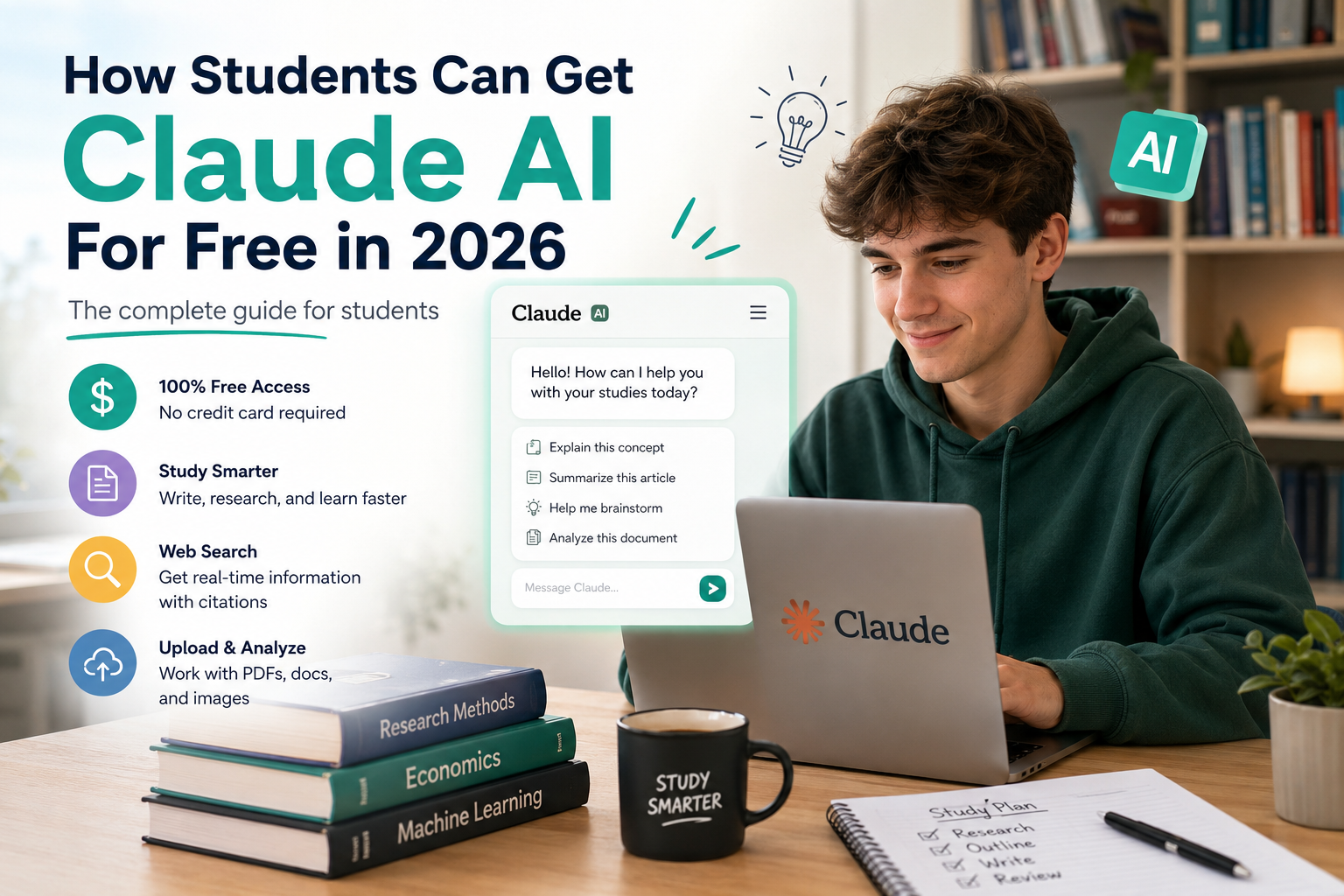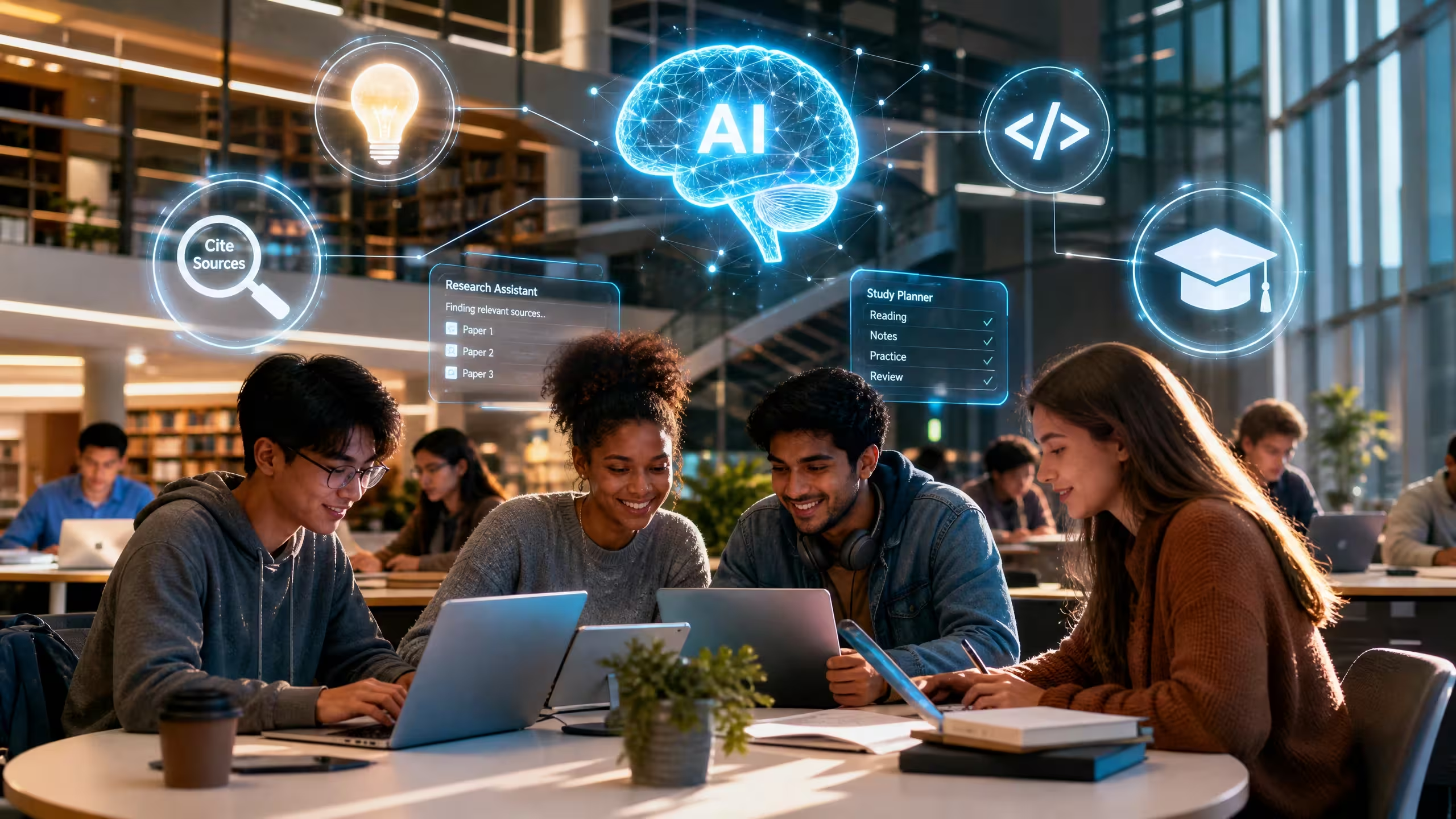
In the rapidly evolving landscape of education, Artificial Intelligence (AI) has emerged as a powerful ally for students worldwide. Far from being a mere distraction, AI tools are revolutionizing how students approach learning, research, writing, and organization. As we step into 2026, the integration of AI into academic life is no longer optional but a strategic advantage for those aiming to excel. This comprehensive guide explores the most impactful AI tools available to students, designed to streamline workflows, enhance understanding, and unlock unprecedented academic potential.
Why AI is Indispensable for Today's Students
AI tools offer a myriad of benefits, addressing common student challenges such as time management, information overload, and complex problem-solving. By automating tedious tasks and providing intelligent assistance, AI empowers students to focus on critical thinking, creativity, and deeper learning. From personalized study aids to advanced research assistants, these technologies are reshaping the educational experience, making it more efficient, engaging, and effective.
Top AI Tools Comparison for 2026
To help you choose the right companion for your academic journey, the following table compares the leading AI tools based on their primary function and standout features.
| Tool Name | Primary Category | Standout Feature | Best For |
| NotebookLM | Research & Analysis | Audio Overview (Podcast generation) | Synthesizing personal notes and sources |
| SciSpace | Academic Research | Literature Review (280M+ papers) | Thesis writing and literature reviews |
| Perplexity AI | Search & Discovery | Academic Mode (Peer-reviewed sources) | Real-time, cited information retrieval |
| Claude | Writing & Reasoning | Long-context window & Artifacts | Drafting complex essays and coding |
| GitHub Copilot | Coding & Development | Real-time code suggestions | Learning to code and project development |
| Notion AI | Productivity | Integrated "Second Brain" | Organizing notes, tasks, and projects |
| Quizlet | Study & Exam Prep | Q-Chat (AI Tutor) | Active recall and exam preparation |
Deep Dive: Research and Document Analysis
Navigating vast amounts of information is a cornerstone of academic life. NotebookLM by Google has become a favorite for its ability to act as a personalized AI research partner. By uploading PDFs, websites, and even YouTube videos, students can ground the AI in their specific course materials. Its unique "Audio Overview" feature can even turn dense textbooks into engaging, podcast-style discussions, allowing for learning during commutes or exercise .
For those tackling advanced academic literature, SciSpace offers an unparalleled suite of tools. It allows students to search across over 280 million papers and provides citation-backed answers to complex questions. The "Chat with PDF" feature is particularly useful for decoding intricate formulas or tables within a research paper, while its integrated citation generator ensures that bibliographies are always perfectly formatted .
When quick, reliable facts are needed, Perplexity AI stands out as a superior alternative to traditional search engines. Its "Academic Mode" specifically filters results to prioritize peer-reviewed journals, ensuring that the information used in essays is credible and well-sourced. The "Deep Research" capability further assists by performing multi-step reasoning to provide comprehensive answers to multifaceted queries .
Mastering Writing and Technical Skills
Writing remains a critical skill, and Claude by Anthropic has gained a reputation for producing the most human-like and nuanced academic prose. Its "Artifacts" feature provides a side-by-side workspace for refining documents or code, making it an excellent choice for drafting lengthy essays or complex reports. Many students prefer Claude's tone, which often feels less robotic than other generative models .
In the realm of technical education, GitHub Copilot and Cursor AI are transforming how students learn to program. By providing real-time code suggestions and debugging assistance, these tools act as an ever-present pair programmer. For data science and machine learning students, Google Colab remains essential, offering free access to powerful GPUs that would otherwise be prohibitively expensive for individual use .
Enhancing Productivity and Exam Readiness
Staying organized is half the battle in university. Notion AI centralizes this effort by integrating AI directly into a student's workspace. It can automatically summarize lecture notes, extract action items from meetings, and even help draft initial outlines for projects. This "second brain" approach ensures that no important detail is lost in the shuffle of a busy semester .
Finally, for exam preparation, Quizlet and Khanmigo offer personalized tutoring experiences. Quizlet's AI-powered "Q-Chat" engages students in active recall, while Khan Academy's Khanmigo provides step-by-step guidance through difficult problems without simply giving away the answer. These tools ensure that students don't just memorize facts but truly understand the underlying concepts .
Conclusion: Embracing the Future Responsibly
The AI revolution in education is not about replacing the student's effort but augmenting it. By strategically using these tools, students can overcome traditional barriers to learning and achieve a higher level of academic excellence. As we move through 2026, the most successful students will be those who master the art of collaborating with AI to enhance their own critical thinking and creativity.